
King's College team wins access to cutting-edge Google quantum chip
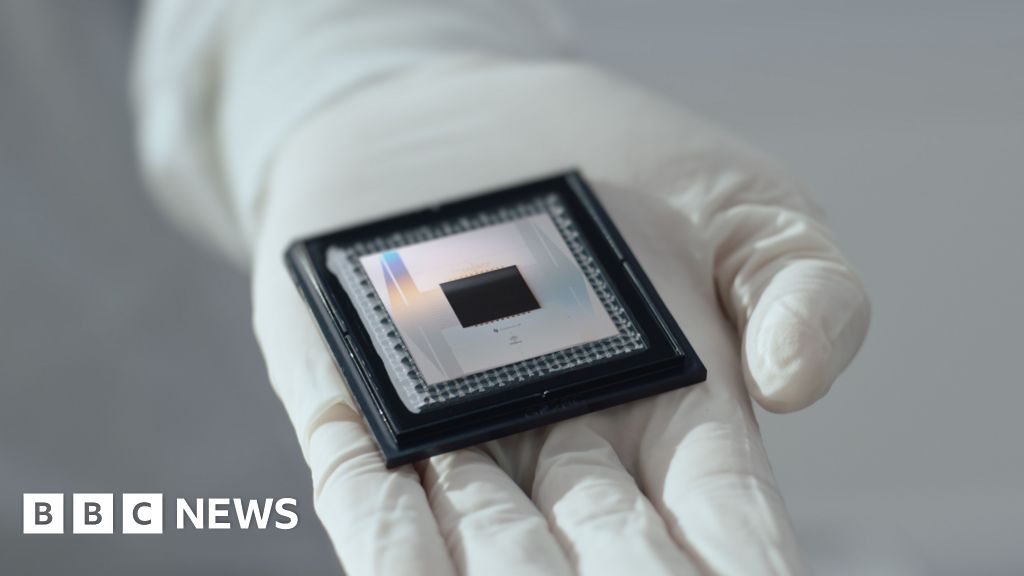
Researchers at King's College London have won access to Google's Willow quantum chip, making them the first UK academic team invited to work on the processor through a programme run with Britain's National Quantum Computing Centre. The project is not about replacing ordinary computers, or about producing a near-term consumer gadget. Its promise is narrower but potentially powerful: use a quantum machine to explore natural systems whose moving parts multiply so quickly that even the best classical supercomputers struggle to describe them.
Why Willow matters
Google has promoted Willow as a major step towards useful, large-scale quantum computing, saying it completed one theoretical benchmark in minutes that would be out of reach for today's fastest conventional machines. Benchmarks of that kind do not automatically translate into practical breakthroughs, and quantum computers still face hard engineering problems around errors, stability and scale. Even so, access to real hardware lets researchers test algorithms and assumptions that cannot be fully proven on simulations alone. It also exposes practical details: how noise affects calculations, how often answers must be repeated, and where a clever algorithm fails because the device is still too small. Those lessons are valuable even before any headline scientific discovery.

The King's project is led by Dr Eleanor Crane and co-led by Dr Alexander Schuckert of ENS Paris. Their focus is on the physics behind processes such as photosynthesis, molecular binding and the movement of electricity through advanced materials. These systems depend on the interactions of many quantum particles at once, creating a mathematical explosion that classical machines can only approximate. Better models could one day guide more efficient solar cells, stronger power-grid materials and drug discovery against diseases that remain difficult to treat.
The award also signals how strategic quantum computing has become for UK science. The NQCC and Google Quantum AI asked British research groups to propose projects for Willow, and King's was judged compelling enough to get the opportunity. For the team, the value is not just raw computing time; it is the chance to learn which scientific questions can be rewritten in a form a quantum processor can handle, and which results can be checked against laboratory evidence. That translation work is often less visible than the hardware itself, but it is essential if quantum computing is to move from impressive demonstrations to reproducible scientific tools.

That caution matters. Today's quantum devices are experimental, and useful applications may arrive through incremental techniques rather than a sudden leap. But if teams can turn Willow experiments into better tools for modelling nature, the benefits could reach energy, medicine and materials science well beyond the quantum lab. Early results may be technical, but they could shape which problems receive future quantum investment. Source: BBC Technology.
Related articles

Hacked, leaked, and held for ransom: the worst breaches of 2026 so far
From a massive DOGE data breach and the hacking of critical energy and water systems to the hack of an FBI surveillance system, here are the most damaging security incidents and data breaches of 2026.
Create AI images with your own API key
aixipi runs on desktop/web, uses your own model API balance, and avoids subscription lock-in.
Try aixipi →
TechCrunch Mobility: Inside GM’s $900M EV battery gamble
Welcome back to TechCrunch Mobility — your central hub for news and insights on the future of transportation.

OpenAI is still working on that ‘super app’
"Chat is dead" — at least, according to a senior OpenAI employee.