
Oxford scientists race to prepare Ebola vaccine for trials as DR Congo risk rises
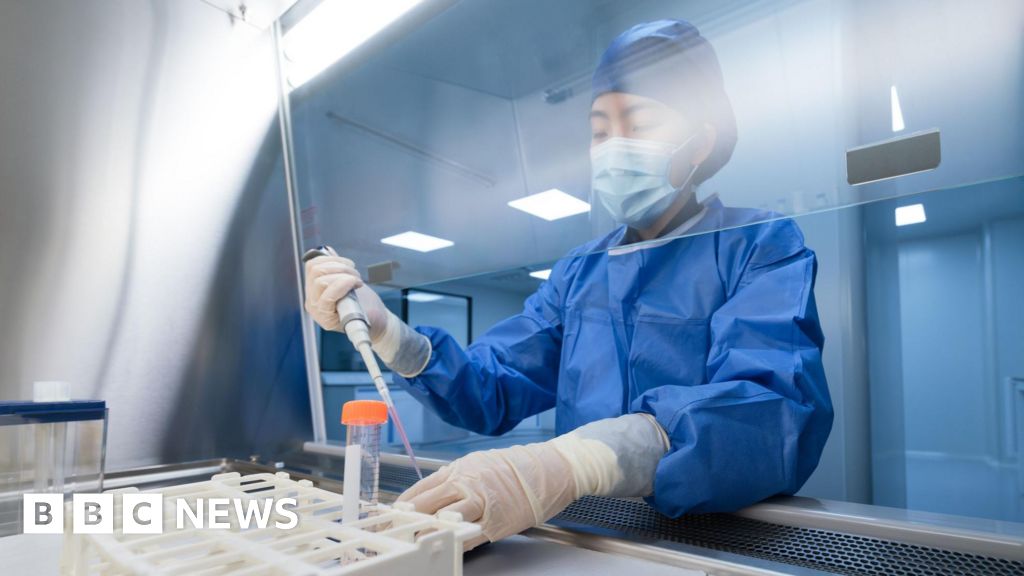
BBC News reports that oxford scientists are developing a vaccine candidate for the Bundibugyo species of Ebola, which has no proven vaccine and is linked to an outbreak in DR Congo that has raised regional health concerns. Oxford scientists say a candidate could be ready for clinical trials within two to three months. For Noozly readers, the useful point is not only the headline itself, but the pressure it reveals beneath the surface: institutions, households, companies, or researchers are adapting to conditions that are changing faster than older routines can absorb.
Why it matters
The story matters because outbreak science is only useful if it can move quickly while still protecting safety, trust, and trial quality. The outbreak in DR Congo involves the Bundibugyo species of Ebola. That makes the development bigger than a one-day update. It points to a system under strain, where the next decision depends on whether early signals become durable behavior. Readers should therefore treat the story as a marker of direction rather than a completed outcome.

The numbers and details give the story weight. BBC reporting cites 750 suspected cases and 177 deaths. In practical terms, that means the consequences could spread beyond the people or organizations directly named in the report. Markets, public services, local businesses, families, and research teams all respond when uncertainty becomes expensive or when a promising tool appears to shorten a difficult process.
What to watch next
There is still plenty of uncertainty. WHO has raised the risk in DR Congo to very high while the global risk remains low. That is why the most important question is not whether the headline sounds positive or negative, but whether the next step is measurable. Strong follow-through would include timelines, transparent data, operational capacity, and a way to correct course if early assumptions prove wrong.

Watch how quickly animal work, ethics approvals, community engagement, and trial logistics can line up. A vaccine candidate is only the first step in a chain that has to reach affected communities. The broader pattern is familiar across news categories: an early development creates hope, anxiety, or momentum, but the real test comes when policy, money, logistics, and human behaviour meet. That is where many promising stories either become structural change or fade into another short news cycle.
Noozly's view: this is a draft worth reviewing because it combines immediate news value with a clear explainer angle. It gives readers the facts, the stakes, and the next indicators to watch without pretending that one report answers every question. Editors may want to add local context or a stronger visual lead before publishing.

Read the original report at BBC News.
Related articles

Medieval pandemic left a hidden legacy in Europe's oldest trees
A new study published in the Proceedings of the National Academy of Sciences demonstrates how radiocarbon dating can reveal the maximum lifespan of Mediterranean hardwoods, uncovering hidden links between human history and long-term ecosystem dynamics. By analyzing mature and ancient oak trees across Italy, researchers found that a millennium of age is attainable from the Mediterranean coast to mountain environments.

Create AI images with your own API key
aixipi runs on desktop/web, uses your own model API balance, and avoids subscription lock-in.
Try aixipi →
Black teachers improve outcomes for all students, but the profession remains largely white
Having Black teachers and other educators of color improves students' classroom experiences, research shows. They often serve as role models, set high academic expectations and teach material that connects to students' lives outside of schools.

Machine learning uncovers 1,750 quakes tracing 250-kilometer edge of Alaska microplate
Thousands of small earthquakes, detected for the first time by a machine-learning process, reveal the distinct, razor-sharp edge of the Yakutat microplate as it subducts beneath the North American plate.